


Square Point of Sale: Payment
Block, Inc.
I approached Square Point of Sale: Payment as more than a checkout app. For a small business, a point-of-sale tool sits close to money, customer information, staff access, and daily routines, so trust matters just as much as speed. My experience is that Square’s mobile approach can make selling feel far less tied to a traditional counter, but it also asks the owner to think carefully about account control, device security, and how much of the business should depend on one service.
Developed by Block, Inc., this free business app is aimed at sellers who need to handle payments and ordinary sales tasks from a mobile device. It is suitable for everyone from an age-rating perspective, runs on operating systems from version 9 onward, and has reached more than ten million installs. Those figures suggest that it is not an experimental tool, but popularity alone is not a reason to hand over a business workflow without checking how it fits your needs.
Why trust is the real starting point for a mobile checkout
Square Point of Sale is useful because it brings several jobs into one place: taking sales, handling invoices, supporting retail or restaurant activity, and working with appointments. That breadth is convenient, especially when I imagine a business that sells in person during the week, sends an invoice for a larger order, and books customers at another time. The trade-off is that a broader system can affect more parts of a business than a simple card reader or a basic cash register.
The app has been available since May 11, 2010, and its current version is 6.97. It carries an average rating of 4.6 from roughly 255,000 ratings, with about 54,000 written reviews. I read that level of adoption as a sign that many people find the core idea practical, while still keeping my expectations realistic: a high rating does not remove the need to verify account settings, transaction details, and staff permissions before going live.
My first recommendation is to separate “easy to start” from “safe to operate.” Installing an app is only the beginning. Before the first real customer pays, I would review who can sign in, which devices are used, what information appears on receipts, and how the owner can regain control if a phone is lost or an employee leaves. The most important trust decision is often not inside the sales screen; it is the discipline around the account that supports it.
Related News

Why WhatsApp Messenger Still Makes Everyday Communication Feel Easy

Jurassic World: The Game Is the Better Dino Tycoon for Strategic Players

Threads in Real Life: Who Should Join, Lurk, or Leave

How SHEIN Turned Shopping Into an Endless Content Feed

How to Make Fortnite Feel Smarter on Mobile

Should You Switch to Microsoft Outlook on Mobile?
Where the mobile design makes sense
A mobile checkout is especially appealing for a market stall, a service professional visiting customers, a small café with limited counter space, or a shop that occasionally sells outside its usual premises. I can see the benefit of keeping the sales process close to the customer instead of sending everyone to one fixed register. It can also reduce the awkward handoff between taking an order and recording it later, which is where mistakes often enter a small operation.
For a business with several locations, a large product catalog, complex stock rules, or demanding staff-management needs, I would be more cautious. Square may still be worth testing, but the owner should compare its actual workflow with a dedicated retail or hospitality platform. A system that feels wonderfully simple for one person can feel restrictive once multiple employees, locations, exceptions, and reporting routines are involved.
What the rating and free price do—and do not—tell me
The app itself is free, which lowers the barrier to trying the workflow. I would not treat that as the same thing as a completely cost-free payment operation. A business should examine the terms connected with accepting payments, invoices, hardware, transfers, and any optional services before committing. The right question is not simply “Can I download it without paying?” but “What will this setup cost at my normal sales volume and in my specific type of business?”
Gallery
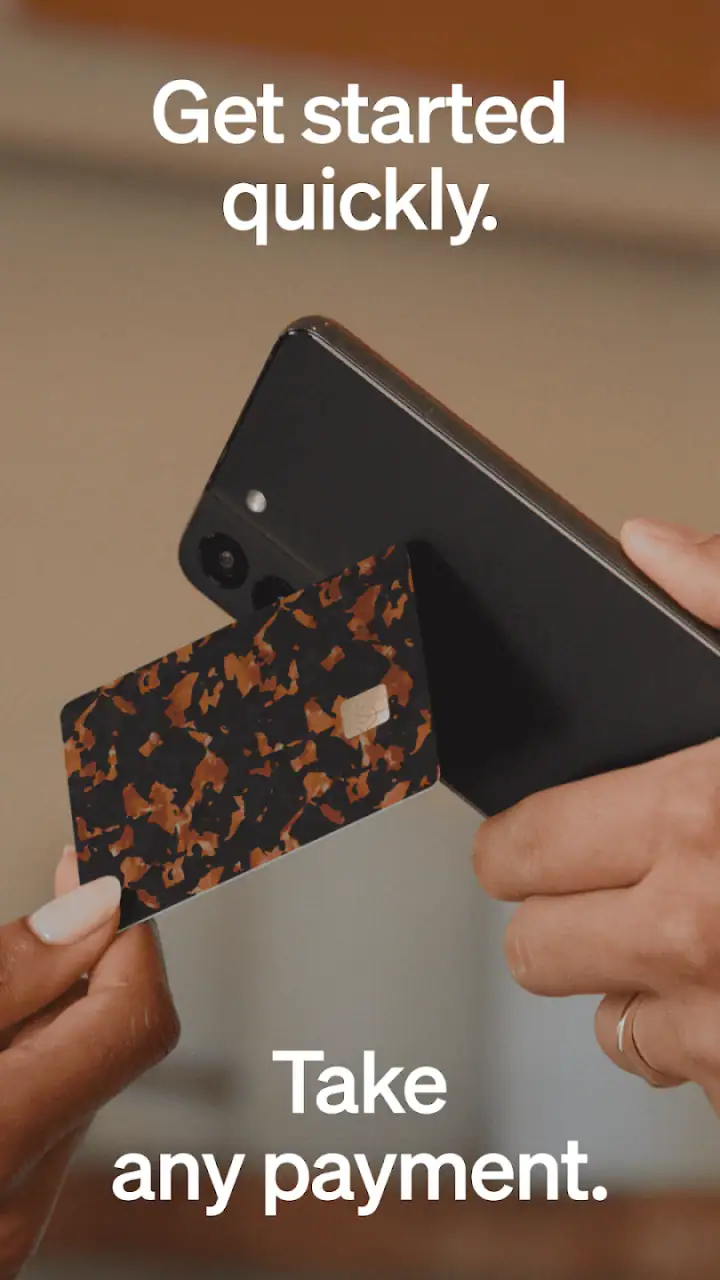
The rating is helpful as a broad signal, yet reviews can combine very different experiences: a solo seller may value quick setup, while a restaurant manager may care more about order changes, staff roles, and busy-period recovery. I would use the rating to justify a trial, not to skip the trial. Run a small test with realistic products, refunds, receipts, and staff access before moving all daily sales into the system.
Controls I would check before accepting a real payment
When I review a business app, I look for visible choices rather than making assumptions about unseen protections. With Square Point of Sale, I would begin with the account itself. The owner account should be treated as the control center, not as a shared login that every worker uses. If several people need to sell, each person should work through the access arrangement the app provides, with only the permissions needed for the job.
This is a practical trust test. A cashier may need to create a sale, while an owner may need to manage refunds, settings, or business information. Sharing one login blurs responsibility and makes it harder to understand what happened after a mistake. Even if a small team feels too informal for separate access, I would resist that shortcut. Staff turnover is exactly when a casual arrangement becomes a security problem.
I would also inspect the account recovery path while the owner still has normal access. Check the email address and phone details connected to the account, keep recovery information current, and make sure more than one responsible person knows the business procedure without having unnecessary access to everything. This is one of the less obvious advantages of preparing early: recovery is much easier when the original owner is available than when a lost phone or former employee becomes the starting point.
Device and session habits matter more than the sales screen
A phone or tablet used as a register should be treated like business equipment. I would use a strong device lock, keep the operating system current, and avoid leaving the device unattended while the app is open. At a busy counter, convenience can encourage people to pass the device around, but that makes it harder to know who approved a change or saw customer details.
Shared devices deserve a clear routine. At the beginning of a shift, the responsible worker should know which account or role is active. At the end, the device should be locked and returned to its designated storage place. If the device is used for other personal apps, I would be especially careful about notifications, saved credentials, and customer-facing screens. A clean separation between personal and business use is not glamorous, but it reduces accidental exposure.
Before relying on the app at an event or in a new location, I would test the complete journey rather than only opening the checkout screen. Confirm that the device is ready, the intended business account is active, the product or service details are correct, and the receipt choice matches what customers expect. A short rehearsal can reveal an account or workflow problem before a queue forms.
Receipts, invoices, and customer information
Sales records can contain more information than the amount paid. Depending on the workflow, invoices, appointments, and receipts may involve names, contact details, service descriptions, or business notes. I would make a deliberate choice about what the customer actually needs to receive and what the staff member needs to see. Avoid adding personal details merely because a field is available.
Invoices deserve special attention because they extend the interaction beyond the counter. Before sending one, check the recipient, line items, due information, and business identity. A wrong address or incorrect amount is not only embarrassing; it can create a second problem when someone forwards the message or stores it in their own records. I would build a habit of reviewing the final screen before sending, particularly when copying an older invoice.
For appointments, I would be cautious about exposing more than the customer needs to know. A service description can be useful for clarity, but sensitive notes should not be casually placed in customer-visible areas. The same principle applies in restaurants and retail: keep operational notes separate from anything printed, displayed, or sent to the buyer whenever the workflow allows it.
Payment moments where I would slow down
The most sensitive moment is the final confirmation. I would check the total, items, discounts, tax treatment where relevant to the business process, and the selected payment method before asking the customer to complete the transaction. A fast interface is valuable only when it does not encourage a rushed confirmation. For new staff, a short checklist is more reliable than expecting them to remember every detail during a busy shift.
Refunds and corrections deserve their own process. I would limit who can perform them, require a clear internal reason, and keep supporting records outside the customer-facing conversation. If a customer says an amount is wrong, do not immediately hand over the owner’s device or share a password just to solve the problem quickly. A controlled correction is slower than an improvised one, but it protects both the customer and the business.
Invoices and appointments also create data-sensitive moments because they can be prepared away from the physical sale. I would avoid creating them while distracted, verify the intended customer, and review the message before sending. The useful, non-obvious lesson here is that mobile flexibility increases the number of places where an error can happen: a seller can work anywhere, but should not let “anywhere” become “without a private screen or a deliberate check.”
How it compares with simpler and more specialized choices
Compared with a basic card terminal, Square Point of Sale offers a wider business workflow. A simple terminal may be easier for a seller who only needs to take payments and keep separate records. Square becomes more attractive when the same operation needs sales records, invoices, retail activity, restaurant use, or appointments in a connected routine.
Compared with a cash register, the mobile format is more flexible and less tied to one counter. That can be a major advantage for mobile services and pop-up selling. The downside is that the business becomes more dependent on the condition and availability of a phone or tablet, the owner’s account, and the surrounding setup. A traditional register may feel less convenient, but its narrow purpose can also make training and daily control simpler.
Compared with a full enterprise platform, Square is easier for a small operation to approach. I would not automatically choose it for a company that needs deep customization, complicated inventory relationships, or extensive administrative separation. Those businesses may benefit from a system designed around their complexity, even if it takes longer to configure and costs more to operate.
A realistic day with the app
Imagine a solo baker selling at a weekend market and taking custom cake orders during the week. At the stall, the baker needs a quick way to record each sale without returning to a back office. Later, a customer may need an invoice for a larger order, while another customer wants to arrange a future appointment for a consultation. Having these activities within one business-oriented app can reduce duplicate notes and make the day easier to organize.
I would still set boundaries. Before opening the stall, the baker should confirm the correct account and product details, secure the device, and decide how customers will receive receipts. During the rush, the baker should pause at the total before confirming each payment. After closing, the device should be locked, sales activity reviewed, and any invoice or appointment created later checked with the same care as an in-person transaction.
This scenario shows both the strength and the weakness. The strength is continuity: selling, invoicing, and customer follow-up do not have to be scattered across unrelated tools. The weakness is concentration: if the account is poorly managed or the device is compromised, several business activities are affected at once. I would choose the convenience only with a clear owner routine behind it.
Who should choose it, and who should pause
I would recommend trying Square Point of Sale if you run a small shop, provide appointments, sell at changing locations, operate a modest food business, or want to connect ordinary sales with invoices. It is particularly appealing when you are moving away from handwritten records but are not ready for a large, complicated business system.
I would pause before choosing it if your business has many staff members, strict separation between duties, complicated stock requirements, or a strong need for highly specialized reporting. I would also pause if you are uncomfortable making the owner responsible for account recovery and device discipline. The app can simplify transactions, but it cannot replace a clear internal policy about who can do what.
For a very small business, the best test is a controlled pilot. Use a limited set of products or services, train one or two trusted people, and walk through a sale, correction, invoice, and appointment workflow. Observe where staff hesitate and where customer information appears. That test will tell you more than a download screen or a general rating because it measures the app against your actual habits.
My cautious verdict
After looking at Square Point of Sale through the lens of trust, I see a practical mobile checkout app with a useful range beyond simple payment collection. Its free entry point, broad business focus, and established presence make it worth considering for small sellers who want sales, invoices, retail, restaurant, or appointment work closer together.
My recommendation comes with a condition: the owner must treat account access, device security, and customer-facing details as part of the product experience. The app can make a business more mobile, but mobility should not mean informal passwords, unlocked screens, or unreviewed invoices. Those habits determine whether convenience remains helpful.
The current version is 6.97, and the app is available for everyone on supported operating systems from version 9. I would install it, run a small private test, and compare the resulting workflow with a simple terminal or a more specialized platform before committing. For a solo seller or small team, I can see it becoming a sensible daily tool. For a complex operation, I would choose it only after confirming that its controls and workflow match the business rather than forcing the business to work around them.
In short, Square Point of Sale earns a cautious recommendation from me. I like the way it can bring mobile selling and related business tasks into one place, but I would never judge it only by how quickly the first sale goes through. The better measure is whether the owner can keep access organized, make informed choices at sensitive moments, and recover gracefully when a device, employee, or customer record creates a problem.
FAQs for Square Point of Sale: Payment
Is Square Point of Sale compatible with both Android and iOS devices?
Yes, Square Point of Sale is compatible with both Android and iOS devices. The app is designed to work seamlessly across different operating systems, allowing you to manage your business transactions effectively. Ensure your device meets the minimum system requirements for optimal performance.
How secure is the payment processing with Square Point of Sale?
Square Point of Sale uses advanced encryption technology to secure all payment transactions. The app complies with industry standards and regulations, ensuring that customer data and payment information are protected. Additionally, Square provides fraud detection and prevention features for added security.
Can I customize the Square Point of Sale interface to suit my business needs?
Yes, Square Point of Sale offers various customization options to tailor the interface to your specific business requirements. You can add custom item categories, modify the layout, and integrate additional Square services for a more personalized experience. This flexibility helps streamline your operations.
Does Square Point of Sale support offline transactions?
Square Point of Sale does support offline transactions, allowing you to continue accepting payments even without an internet connection. Transactions are stored securely and processed once your device reconnects to the internet. However, it's important to ensure a stable connection for regular transaction processing.
What types of businesses can benefit from using Square Point of Sale?
Square Point of Sale is versatile and can be used by a wide range of businesses, including retail stores, restaurants, and service providers. Its comprehensive features, such as inventory management, sales reporting, and customer directory, make it suitable for both small and medium-sized enterprises looking to enhance their payment processing capabilities.
Pros
- User-friendly interface for quick setup.
- Integration with various payment methods.
- Detailed sales analytics available.
- Customizable receipts and reports.
- Offline mode for uninterrupted sales.
Cons
- Limited features in free version.
- Requires stable internet for updates.
- Some features need additional hardware.
- Can be complex for new users.
- Transaction fees may be high for small businesses.


